Introduction: A woman dies of cervical cancer in Africa roughly every two minutes, yet this remains one of the most preventable cancers known to medicine. Human papillomavirus (HPV) drives virtually all cervical cancer cases, but whether HPV status fundamentally reshapes the tumour transcriptome and immune microenvironment — exposing therapeutic vulnerabilities — remains incompletely characterized. This study interrogates that question using publicly available patient genomic data.
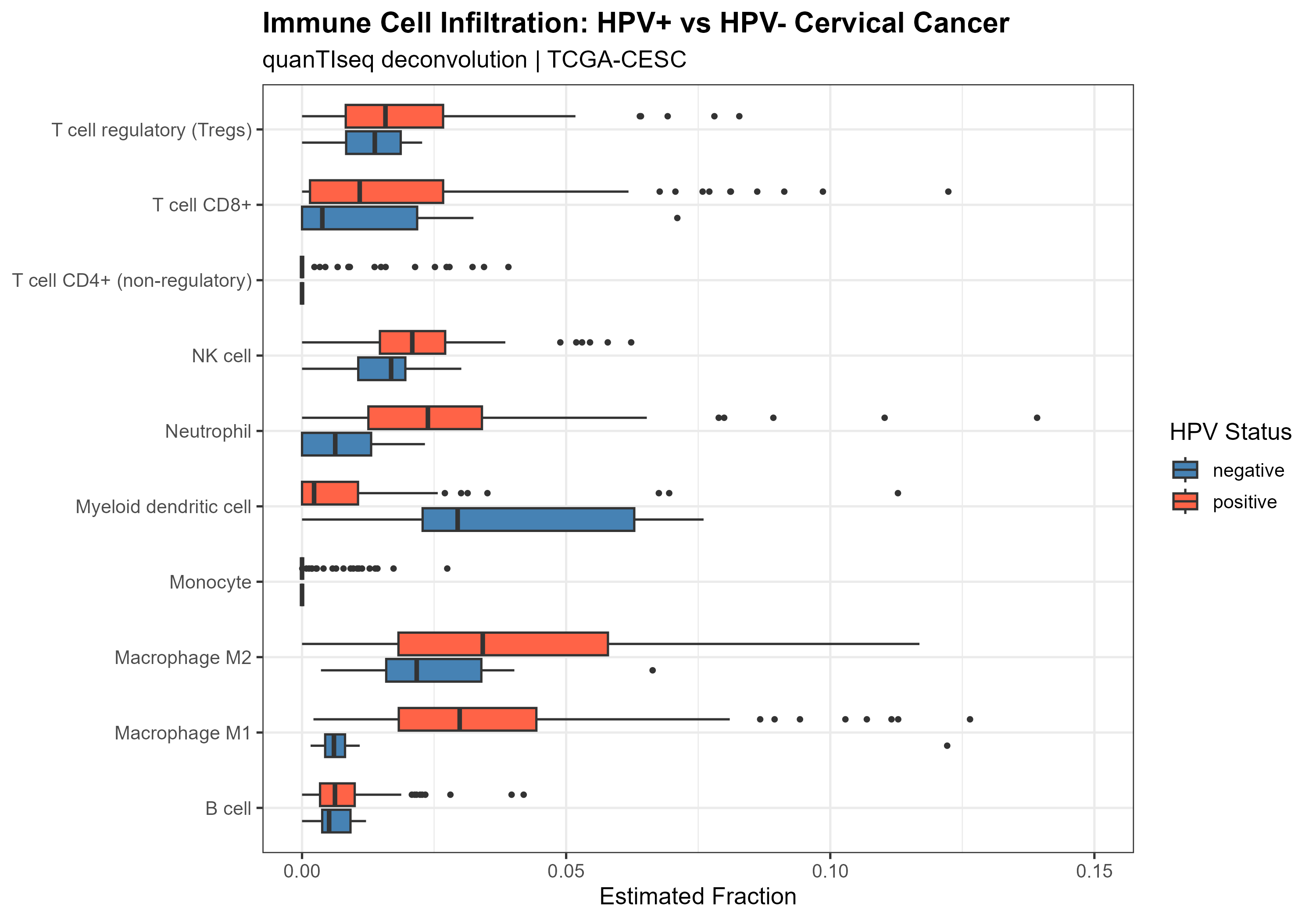
Methods: RNA-sequencing data from 178 primary cervical tumours from The Cancer Genome Atlas (TCGA-CESC) — 169 HPV-positive and 9 HPV-negative — were analysed using DESeq2. Differentially expressed genes (DEGs) underwent Gene Ontology (GO) and KEGG pathway enrichment via clusterProfiler. Tumour immune cell composition was estimated using quanTIseq deconvolution, with statistical comparison by Wilcoxon rank-sum test. Druggability of top DEGs was assessed via DGIdb GraphQL query.
Results: We identified 5,395 significant DEGs (padj<0.05, |log2FC|>1). The top upregulated gene, CDKN2B-AS1 (log2FC=3.2, padj=8.1×10⁻²⁷), is a lncRNA directly implicated in HPV E7-driven p16 suppression. GO and KEGG enrichment was dominated by immune terms, including leukocyte-mediated cytotoxicity and viral protein-cytokine interactions. Immune deconvolution revealed a 13-fold depletion of myeloid dendritic cells in HPV+ tumours (p<0.001), alongside elevated M1 macrophages and neutrophils, suggesting antigen-presentation failure rather than cytotoxic T-cell exclusion as the primary evasion mechanism. DGIdb screening identified AXIN2, a significantly downregulated Wnt-pathway regulator, as currently undrugged — a candidate for structure-based drug discovery.
Conclusions: HPV+ cervical cancer selectively depletes antigen-presenting cells, disrupting the innate-to-adaptive immune bridge without globally excluding immune infiltrates. AXIN2 represents a novel, biologically rational therapeutic target. Findings warrant validation in African patient cohorts, where cervical cancer burden is disproportionately concentrated.